
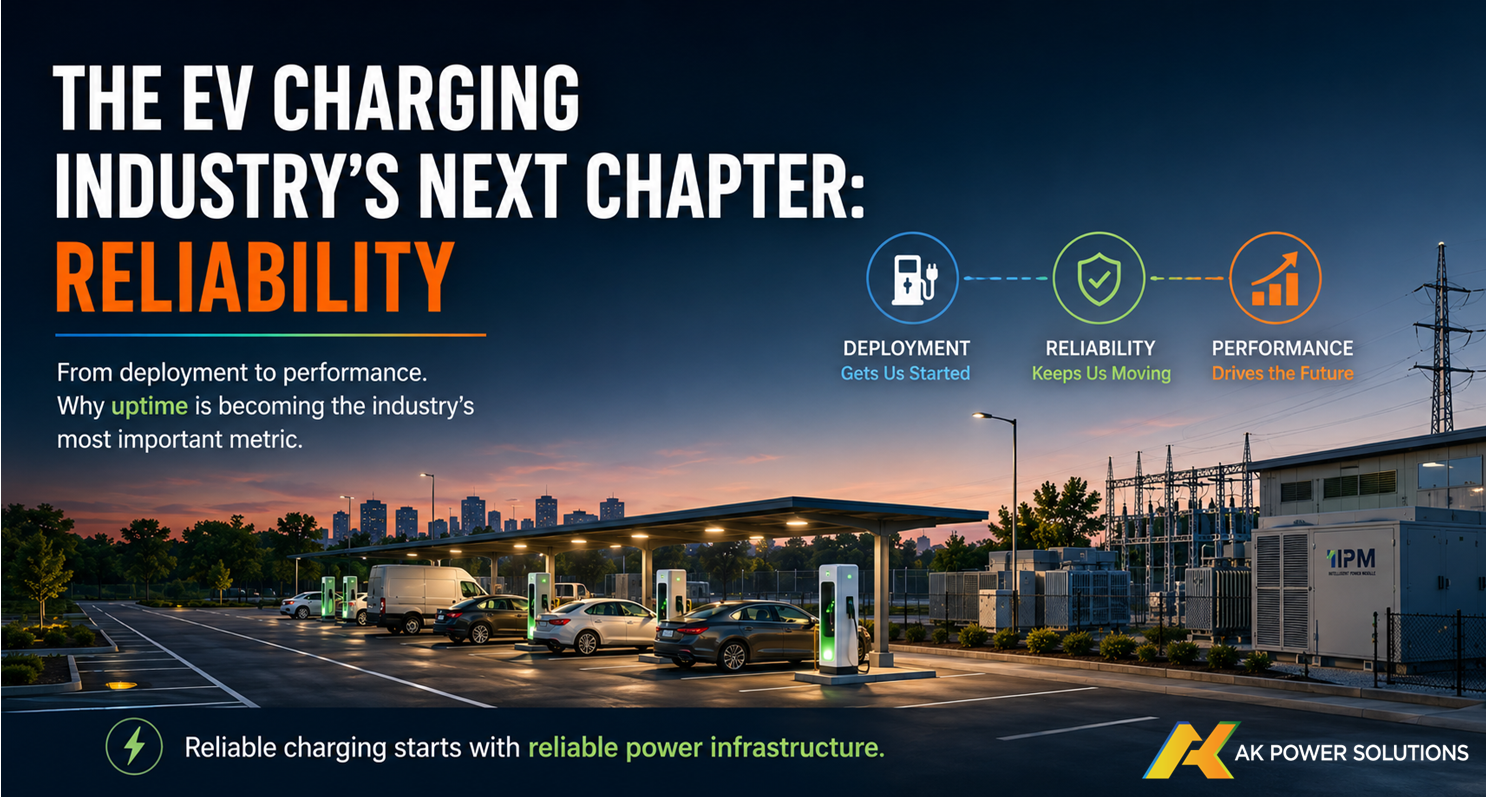
The EV charging industry is entering a new phase.
For much of the last decade, success was measured by deployment. How many chargers could be installed? How quickly could sites be energized? How fast could infrastructure be brought online?
Those were the right questions for an emerging market. Today, the conversation is evolving.
As charging networks mature, fleet operators expand, and project economics face greater scrutiny, success will increasingly be measured not by how much infrastructure is built—but by how reliably it performs.
Installed Doesn’t Mean Operational
For years, success was often measured by charger counts. Announcements highlighted the number of chargers deployed, projects funded, and sites completed. But a charger that has been installed and a charger that is available when drivers need it are not always the same thing. As fleets, site hosts, charging network operators, and infrastructure investors gain more experience, a new metric is becoming increasingly important:
Uptime.
The value of charging infrastructure is not created on ribbon-cutting day. It is created every day after. Reliable operation is becoming just as important as successful deployment.
Reliability Is Becoming the New Competitive Advantage
The next generation of industry leaders may not be the companies deploying the most chargers. They may be the companies keeping the most chargers online. That shift matters because reliability directly impacts:
- Fleet operations
- Driver confidence
- Site utilization
- Revenue generation
- Return on infrastructure investment
As funding becomes more selective and project economics face greater scrutiny, infrastructure performance becomes more important than infrastructure announcements.
The question is no longer: “How many chargers were installed?”
The question is: “How many chargers are operational when drivers need them?”
Reliability Starts Upstream
When a charger goes offline, the charger itself often receives the attention. Yet charging performance depends on much more than the charging hardware.
- Utility connections.
- Power infrastructure.
- Commissioning.
- Integration.
- Controls.
- Site design.
All of these influence long-term operational performance. In many cases, the most important equipment at a charging site is also the least visible. Reliable charging starts upstream.
What Reliability Means for Power Infrastructure
Reliable charging begins long before a charger is energized. It begins with the design, integration, testing, and commissioning of the power infrastructure supporting the entire site. Every additional field connection, equipment interface, supplier handoff, and onsite integration step introduces another opportunity for delays, rework, commissioning challenges, or operational issues
As projects grow in scale and complexity, reducing those variables becomes increasingly important. That is why many developers, fleet operators, EPCs, and infrastructure providers are reevaluating how power systems are designed and deployed.
At AK Power Solutions, we believe reducing complexity is one of the most effective ways to improve deployment certainty. Our Integrated Power Module (IPM) brings critical power infrastructure together into a single factory-integrated, factory-tested system before arriving onsite. The result is infrastructure designed to:
- Reduce field complexity
- Improve commissioning readiness
- Increase deployment certainty
- Minimize coordination challenges
- Support reliable operation from Day One
The industry’s next challenge is not simply building more charging infrastructure. It is building infrastructure that performs consistently over time.
The Industry’s Next Measure of Success
Deployment remains important. The industry still needs additional charging capacity, faster project delivery, and expanded infrastructure investment. But deployment alone is no longer enough. As the market matures, reliability will increasingly become the metric that determines long-term success.
The first chapter of the industry was deployment. The next chapter is reliability.
Organizations that recognize this shift early will be better positioned to deliver infrastructure that not only gets built—but continues to perform long after deployment is complete. Reliable charging is becoming one of the industry’s most important performance metrics. As charging infrastructure scales, power infrastructure will play an increasingly critical role in deployment certainty, commissioning readiness, and long-term operational success.
Moving Beyond Deployment
The future of EV charging will continue to require investment, innovation, and infrastructure expansion. But long-term success will increasingly depend on operational performance. Organizations that prioritize reliability, simplify deployment, and reduce field complexity will be better positioned to deliver charging infrastructure that performs consistently over time.
At AK Power Solutions, we’re helping customers build power infrastructure with those goals in mind through factory-integrated, factory-tested solutions designed to reduce field complexity and support reliable operation from Day One.
Learn more about our Integrated Power Module (IPM) and factory-integrated power solutions at www.akpowers.com or contact our team at sales@akpowers.com.